Remanufacture and Rebuild Services
Founded in 2005 by former Stokes Vacuum Technicians, operates from a 20,000 square foot facility north of Grand Rapids servicing customers worldwide, with over 20+ years of industrial vacuum pump and blower expertise.
Repairs, New and Used Sales, Rebuilds, Re-manufactures numerous brands of pumps and blowers including GLV, Stokes, Edwards, Microvac, Leybold, Kinney, Roots, Tuthill, and Welch.
See Statement of Work below FAQs:
Rebuild and Repair FAQ
What brands of vacuum pumps and blowers does GLV service?
We regularly service GLV, Stokes, Edwards, Microvac, Leybold, Kinney, Roots, Tuthill, and Welch equipment. Common models we rebuild include:
- GLV 1.5 and GLV 3.0 pumps
- Edwards Stokes 212H, 212J, 412H, 412J, and 612MB Microvac rotary piston pumps
- Leybold TRIVAC D65 B and SOGEVAC SV 300 B vacuum pumps
- Leybold RUVAC WAU 1001 and WSU 1001 mechanical booster pumps
- Welch DuoSeal 1376 vacuum pumps
- Roots 10×24 RGS HVB mechanical booster blowers
- Edwards Stokes 615 Microvac boosters
If your pump isn't on this list, contact us anyway — we have relationships with most major industrial vacuum equipment OEMs and can source parts or handle unusual rebuilds.
What's included in a standard vacuum pump rebuild at GLV?
Every standard rebuild at GLV follows the same Statement of Work:
- Receiving inspection with photos of any shipping damage or unusual wear.
- Complete teardown — every nut and bolt removed, damaged parts and failure debris documented photographically.
- Caustic hot tank cleaning, industrial parts washer cycle, rinse and air dry (aluminum and delicate parts handled separately).
- Detailed inspection of every wear surface with calipers and micrometers, compared to OEM specifications.
- Written quote showing anything required beyond the standard rebuild before we proceed.
- Replacement of all gaskets, O-rings, lip seals, mechanical seals, shaft sleeves, sight glasses, pump and motor bearings, vee belts, clappers, poppets, springs, freeze plugs, solenoid valves, check valves, ball valves, and oil flow indicators.
- Motor-to-solenoid wiring redone in seal-tight where applicable.
- Pre-lube, fresh oil fill, helium leak check, and a four-hour vacuum level performance test monitoring temperature, vacuum level, and motor amperage.
- Repaint in our paint booth with high-quality paint, multiple coats. New warning labels, operation labels, and updated serial tag.
- Custom heavy-duty skid sized to the unit, bagged and wrapped, bolted down with side protection for shipping.
The goal is that the rebuilt equipment is indistinguishable from new in both appearance and performance.
How long does a vacuum pump rebuild take?
Standard rebuild turnaround is typically 4–8 weeks from receipt of the pump, depending on current shop load, parts availability, and whether the teardown inspection reveals issues beyond a standard rebuild. For rush situations, call us directly at (888) 633-7127 — we can sometimes accommodate expedited timelines on common pump families where we stock subassemblies.
How much does it cost to rebuild a vacuum pump?
Rebuild pricing depends heavily on pump family, pump size, and condition at teardown. After the initial inspection we provide a written quote showing the standard rebuild cost plus any parts or labor required beyond a standard rebuild (for example, hot pumps, oxygen service pumps, electric motor repairs beyond bearings, or pump-and-blower packages).
A rebuilt pump typically costs a fraction of a new replacement while delivering the same performance and a longer warranty than most used equipment. For a ballpark before you ship, call (888) 633-7127 or email a contact form with your pump make, model, serial number, and a photo of the nameplate.
What's the difference between repair, rebuild, and remanufacture?
In our shop, these terms mean different things:
- Repair — fixing a specific failure, such as replacing a failed seal or bearing, without a full teardown.
- Rebuild — complete teardown, cleaning, inspection, and replacement of all standard wear parts to restore the pump to OEM specifications. This is what most customers mean when they ask for a “rebuild.”
- Remanufacture — the full rebuild process applied to a pump that we own and sell, resulting in equipment indistinguishable from new. Remanufactured pumps ship with a longer warranty (18 months on Stokes) and are tested, painted, and labeled as new stock.
What warranty does GLV offer on rebuilt and remanufactured pumps?
Warranty terms by equipment type:
- Stokes rebuilds and remanufactured Stokes pumps: 18 months from date of shipment or rebuild.
- Other brand rebuilds (Edwards, Leybold, Kinney, Welch, Roots, Tuthill, etc.): mostly 18 months but varies based on rotary piston, vanes, and blowers.
- New GLV pumps (GLV 1.5, GLV 3.0): 25 months from date of shipment.
All warranties cover defects in material and workmanship provided the equipment is used according to the instructions and preventive maintenance requirements in the OEM manual. Shipping costs are not covered under warranty.
Are rebuilt vacuum pumps as good as new?
For the pump families we specialize in — particularly Stokes Microvac rotary piston pumps — a properly rebuilt pump performs identically to a new one. Our rebuild process replaces every standard wear item with OEM-spec parts, restores machined surfaces, helium leak checks the assembled pump, and runs a four-hour vacuum level performance test. Any part out of OEM tolerance is replaced; we do not use repaired or non-OEM-size parts. Many of our remanufactured pumps ship with an 18-month warranty — longer than the warranty on most used equipment.
Do you service pumps in oxygen or hot-process service?
Yes. Hot pumps, oxygen service pumps, and pump-and-blower packages require additional parts and labor beyond a standard rebuild. These are quoted separately after teardown inspection. If you're shipping a pump from oxygen service, please note that on your paperwork so we handle it with the appropriate cleaning protocols.
Can GLV repair electric motors on vacuum pumps?
We handle motor bearing replacement as part of a standard rebuild. Electric motor repairs beyond bearings (rewinds, stator replacement, etc.) are considered additional and are quoted separately for customer approval. In many cases we coordinate with a motor shop partner to handle those repairs before pump reassembly.
How do I know if my vacuum pump needs a rebuild vs. a minor repair?
Common signs that a pump needs more than a minor repair include: inability to reach or hold ultimate vacuum, oil contamination or excessive oil carryover at the exhaust, unusual noise or vibration, elevated operating temperature, or visible oil leaks at seals. Read our full diagnostic guide.
Shipping, Pickup, and Logistics
Does GLV ship worldwide?
Yes. We ship parts, kits, oils, and full pump assemblies worldwide. For rebuilt or remanufactured pumps, units are custom-skidded, bagged, wrapped, and fastened to a heavy-duty skid sized specifically to the unit. For international shipments, contact us in advance so we can prepare the appropriate export documentation and quote freight.
How do I ship my vacuum pump to GLV for repair?
Drain the oil before shipping, note any known issues on your paperwork, and include your contact information and return shipping preferences. Common carrier shipping to our Comstock Park facility is the standard route. Local customers in West Michigan can arrange drop-off or pickup. For help coordinating freight, call (888) 633-7127 and we'll walk you through it.
What does it cost to ship a rebuilt vacuum pump?
Rebuilt pumps are heavy freight: a Stokes 412J-14 ships at roughly 2,200 lbs, class 85, on a custom skid. Shipping cost depends on destination, carrier, and freight class. We can arrange common carrier shipping or you can schedule your own carrier for pickup. Local delivery in West Michigan is also available depending on location.
Can I pick up my pump in person?
Yes. Our facility at 220 Lamoreaux Dr NE, Comstock Park, MI 49321 is open for customer pickup during normal business hours. Call ahead at (888) 633-7127 or (616) 363-6150 to confirm your equipment is ready and to coordinate timing.
Last updated: April 2026
Statement of Work
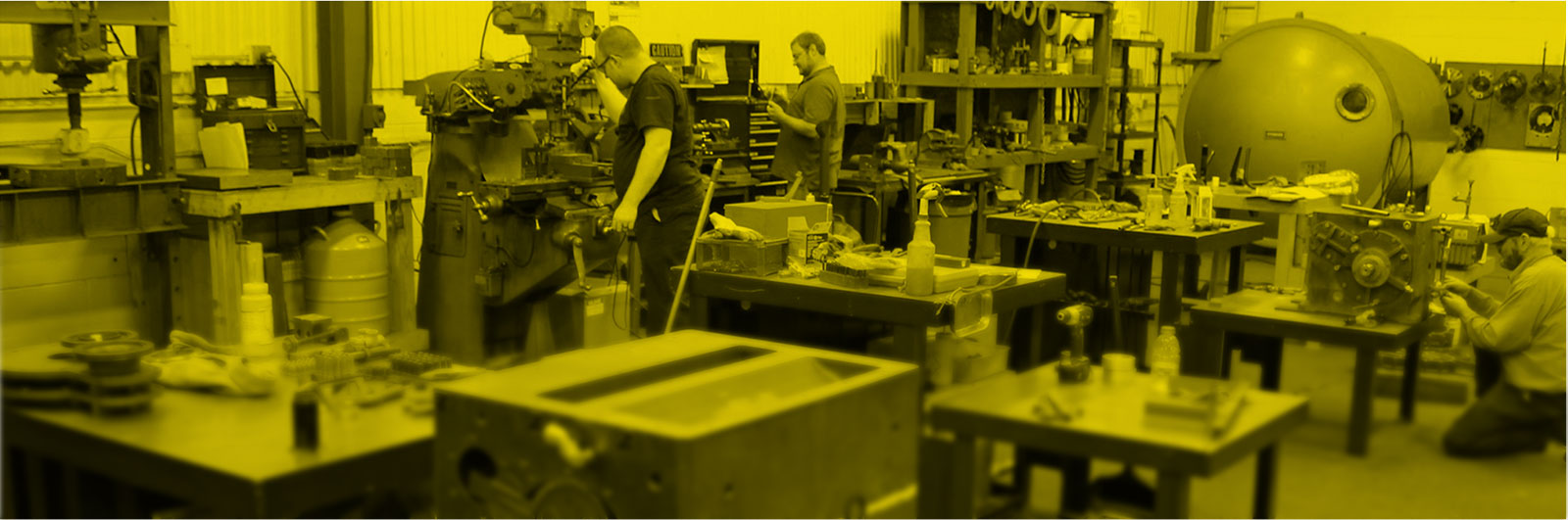
All pumps and blowers are visually inspected during receiving. Any damage from shipping is noted and photos are taken immediately. Upon uncrating a visual inspection of the unit is done and any missing components are noted.
All equipment is torn down completely, including every last nut and bolt. Any damaged parts are noted and photos are taken. Any large failure causing debris found inside the unit is saved and photographed to show the cause of failure.
The paint and oil is removed from all components (except aluminum and some other delicate parts) via a caustic hot tanking cycle. This is followed by an industrial parts washer cycle. Components are then rinsed and air dried.
A detailed inspection is performed where all wear surfaces are measured with calipers or a micrometer and the results are compared to OEM specifications to determine which parts are out of spec and should be replaced. A detailed quote is then provided to the customer showing what, if anything, is necessary beyond a standard rebuild.
Upon receipt of a purchase order for the rebuild, the entire pump or blower is cleaned with an industrial soap and scrubbed to remove all oil residues. Then all machined surfaces are tool polished and finish sanded. Some fittings and fasteners are blasted and/or replaced as necessary.
During pump assembly any gaskets, O-rings, lip seals, mechanical seals, shaft sleeves, sight glasses, bearings, vee belts, clappers, poppets, springs, freeze plugs, solenoid valves, check valves, ball valves and oil flow indicators are replaced. Motor to solenoid valve wiring is done in seal tight when applicable.
At the testing stage units are pre-lubed and filled with new oil. All equipment is then helium leak checked. This is followed by a four hour vacuum level performance test, during which temperature, vacuum level and motor amperage are monitored.
All equipment is repainted with high quality paint in our paint booth and given multiple coats, such that rebuilt equipment is indistinguishable from new. All belt guards, flywheels and pulleys are also painted for prolonged protection. Once dry, new warning and operation labels are then attached as well as an updated serial tag.
Great Lakes Vacuum custom makes heavy duty skids sized specifically to the unit for maximum protection during transit. All equipment is bagged and wrapped prior to being fastened with bolts to the skid and having sides attached to the skid for further protection on its way back to you.
Warranty
All repairs are warranted against defects in material and workmanship for a period of 18 months for Stokes pumps (12 months all other pumps and blowers) from the date of rebuild, provided that the equipment is used in accordance with instructions and preventative maintenance requirements as stated in the operating manual.
Additional Repairs
Electric motor repairs (other than bearings), missing parts and additional parts that are not included in a standard rebuild are considered additional and will be quoted in writing for customer approval. Hot pumps, oxygen service pumps and pump and blower packages require additional parts and labor not included in a standard rebuild.
Projects
Popular examples of vacuum pumps and mechanical boosters that GLV frequently works on include:
Edwards Stokes 212J Microvac Vacuum Pump, 900-212-014
Edwards Stokes 212H Microvac Vacuum Pump, 900-212-011
Edwards Stokes 412J Microvac Vacuum Pump, 900-412-014
Edwards Stokes 412H Microvac Vacuum Pump, 900-412-011
Leybold TRIVAC D65 B Vacuum Pump, 11296
Welch DuoSeal 1376 Vacuum Pump
Roots 10×24 RGS HVB Mechanical Booster Blower
Edwards Stokes 615 Microvac Booster
Leybold SOGEVAC SV 300 B Vacuum Pump
Leybold RUVAC WAU 1001 or Leybold RUVAC WSU 1001 Mechanical Booster Pumps